

Cottage Grove Local
5.0 from 13 Google reviewsWinter Plant Protection in Cottage Grove
Anti-desiccant treatments, deer protection, and mulching to carry your evergreens, boxwoods, and hollies through a Minnesota winter.
Call or text (651) 983-7136Request an estimate
Tell us what you need
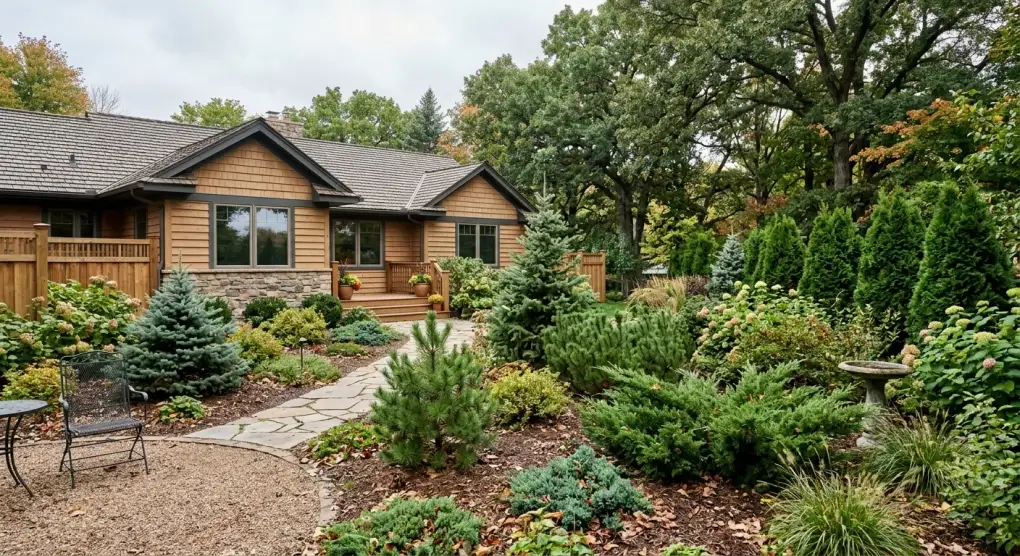
Plant Protection Built for Minnesota Winters
Olson Property Services offers winter plant protection in Cottage Grove, MN for homeowners who can't afford to watch their boxwoods brown out or their prize hollies collapse under February ice. We apply a protective anti-desiccant coating directly to foliage that seals moisture in and keeps windburn from stripping leaves dry. It's the single most effective thing you can do before the ground freezes. Call (651) 983-7136 to schedule before the first hard frost closes your window.
What drives the cost up or down on a job like this is square footage of plantings, species mix, exposure level, and whether burlap wrapping or deer caging is also needed. A property with a handful of foundation boxwoods takes an hour. A property with a mature evergreen screen along a windy west exposure, plus hollies, plus newly installed shrub beds that haven't rooted through a full winter yet, is a different scope entirely. We assess each plant individually before recommending a method. Every job is different, contact Olson Property Services for an accurate estimate.
What We Protect and How
Not every plant needs the same method. We match the treatment to the species and the exposure.
Anti-Desiccant Coating
We spray a waxy protective film on evergreens, boxwoods, and hollies. It slows moisture loss through foliage during dry, windy winters. Plants in west or south exposures need it most. One application in late fall lasts through March.
Burlap Wind Screening
For plants in particularly exposed locations, a burlap screen blocks prevailing wind without smothering the plant. We stake it so it stands clear of the foliage. This is not the same as wrapping tightly, which traps moisture and causes rot.
Winter Deer Protection
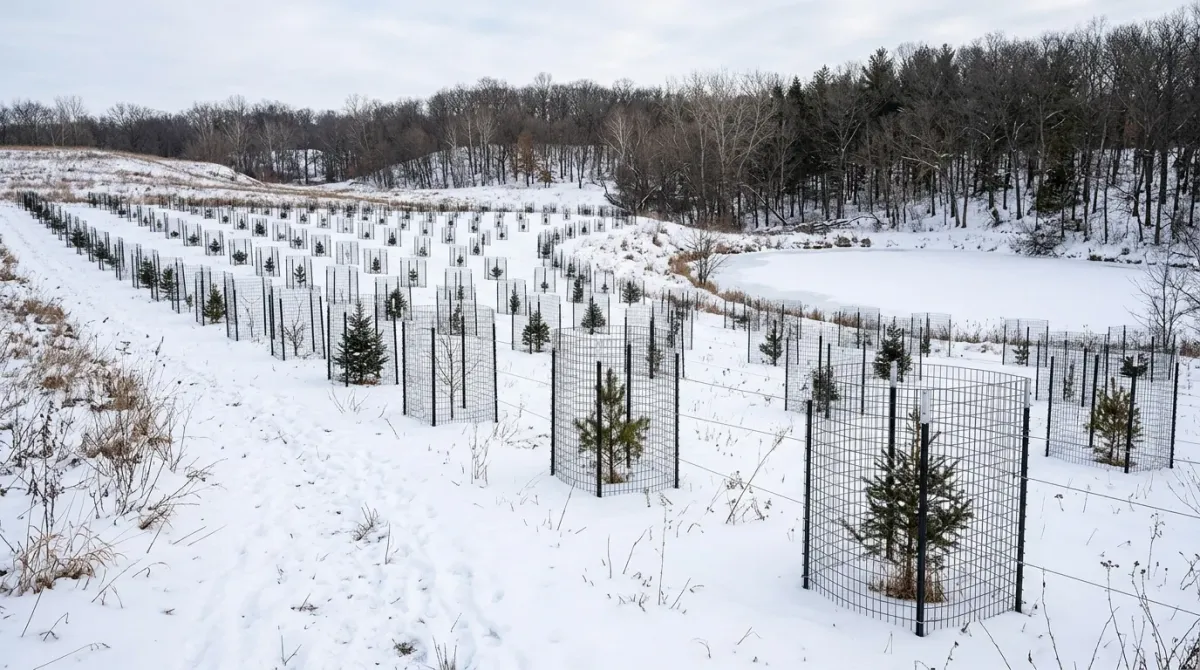
Deer pressure in Washington County gets heavy once natural browse thins out. We install protective caging around vulnerable hollies, arborvitae, and yews. A deer can consume a three-year-old arborvitae in a single night. Caging prevents that.
Mulch Insulation
A 3-to-4-inch layer of yard mulch over the root zone holds soil temperature steady and slows the freeze-thaw cycling that heaves shallow-rooted shrubs. New plantings installed that same fall need this more than anything else.
Snow Load Management
Columnar and upright shrubs, arborvitae in particular, can split under heavy wet snow. We tie upright specimens with soft twine before winter to hold the structure together. It takes five minutes per plant and prevents damage that takes years to grow back.
How It Works
Three Steps Before the Ground Freezes
Timing is everything with winter plant protection. The window runs from mid-October through mid-November in the Cottage Grove area. After the ground freezes, some of these steps are no longer effective.
Property Assessment
We walk the property and identify which plants are high-risk: newly installed shrubs, borderline-hardy species, plants in windy or sunny exposures, and anything deer have browsed before.
Treatment Application
Anti-desiccant goes on the foliage. Mulch goes over the root zones. Caging and burlap go up around the plants that need structural or browse protection. We do this in sequence so nothing gets missed.
Spring Removal and Assessment
In early spring, we remove burlap, caging, and twine before new growth flushes. We check each plant for winter injury and flag anything that needs corrective tree trimming or fall landscaping follow-up.
Timing
When to Schedule in Cottage Grove
Plants That Need Protection in Minnesota
Some species are genuinely hardy to Zone 4. Others are sold here but aren't. Know the difference before you skip this step.
Boxwoods
Common boxwood varieties are marginally hardy here. Without anti-desiccant and wind protection, winter bronzing turns to dieback. Some winters they come back. Some they don't.
Hollies
Inkberry holly handles our winters reasonably well. Many ornamental hollies don't. We assess the specific variety before recommending a protection level.
Arborvitae
Hardy but structurally vulnerable. The main threat isn't cold, it's deer browse and snow load splitting multi-stem specimens. Twine and caging solve both.
Broadleaf Evergreens
Rhododendrons and mountain laurels suffer desiccation damage badly in windy sites. They need anti-desiccant and sometimes burlap on the windward side.
Why Homeowners in Cottage Grove Call Olson
5 stars across 13 Google reviews. Locally owned and operated in Cottage Grove. Available 7 days a week through every season.
- Owner-operated accountability
- Tanner Olson runs the jobs. There's no subcontracting to a crew you've never met.
- 7-day availability
- Fall windows close fast. We're available every day to get treatments done before your window closes.
- Four-season continuity
- The same company that protects your plants in November does your [spring garden cleanup](/garden-cleanup-service/) and [lawn thatching](/lawn-thatching-service/) in April.
- Species-specific approach
- We don't wrap every plant in burlap and call it done. Different plants get different treatments based on species, exposure, and age.
Common Questions About Winter Plant Protection
When should I winterize my plants in Cottage Grove?
What is an anti-desiccant and why do boxwoods need it?
Do established plants need winter protection or just new ones?
How do I protect evergreens from heavy snow load in Minnesota?
Can winter plant protection reduce spring disease and pest problems?
What's the difference between burlap wrapping and anti-desiccant coating?
Schedule Before Your Window Closes
The fall treatment window in Cottage Grove runs through mid-November. Once the ground freezes, some of these steps are no longer effective.
Related
Next step
Tell us about the job
Tell us who you are, where the job is, how to reach you and what needs doing. A person from Olson Property Services gets back to you.
Rather talk now?(651) 983-7136
Updated